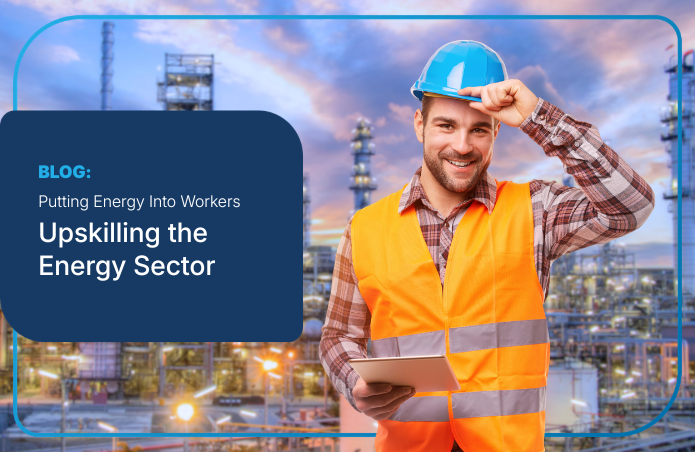

The energy sector is in the news, and it is easy to get lost in the headlines without fully appreciating the shift it is going through. As of early 2026, we find ourselves at a fascinating convergence where traditional oil and gas expertise meets the rapid expansion of hydrogen, Small Modular Reactors (SMRs), and carbon capture technologies. This evolution is as much about the people and their skills as it is about the power.
For leaders in this energy field, this transition presents a paradox: we have one of the most skilled workforces in the world, yet the “green skills gap” feels like an ever-widening chasm. The talent shortage and the time it takes to upskill do pose a challenge, but at Xpan, we don’t see this as a crisis of capability. It is a golden opportunity for a Reskilling Revolution.
Recent data from the C.D. Howe Institute and Natural Resources Canada suggest that nearly 15% of our labor force will see their roles disrupted over the next decade. The study uses a “matching skills” model to measure how far apart jobs are, and there’s a silver lining that often gets buried in the headlines. Many of these occupational transitions aren’t as steep as they seem, though the shift in skills within the energy sector is considered broader and more diverse.
The concept of skill adjacency, related competencies where your current expertise is “next to” or closely related to an evolving role, is often surprisingly easy to bridge. For example, a petroleum pump system operator already possesses about 60% of the foundational knowledge required to transition into biomass or hydrogen plant operations. New skills build on existing comprehension and experience, but employers may not recognize or identify this potential in recruitment or ongoing learning.
The challenge can’t be totally addressed by just teaching a new technical manual. The underlying need is to provide the agility to pivot without losing the safety culture that is the bedrock of our industry. Partnerships between the industry and learning solution providers are key to tailoring sector and role-specific training.
At Xpan, we believe that “knowledge solutions” are only half the battle. You can hand a worker a tablet with the latest AR training module, but if they or their leaders don’t have a growth mindset, that technology is just an expensive paperweight.
A growth mindset is the belief that abilities can be developed through dedication and hard work. It is the psychological engine of resilience, driving an individual’s ability to adapt and recover rather than relying on a fixed ability. In an industry where “the way we’ve always done it” was once a point of pride, we are now helping companies build cultures and reskill so that “the way we’ll do it tomorrow” is the primary driver of engagement.
Why does this matter for your bottom line?
The old model of training, a three-day seminar once a year, is effectively dead. To thrive in the 2026 energy market, firms need learning solutions that are:
The energy sector has always been defined by its grit and its ability to conquer the elements. Today, the “elements” are economic and technological. The transition to a low-carbon, high-reliability energy future is a marathon, not a sprint.
By partnering with an EdTech leader like Xpan we work with you to build a growth mindset throughout your organization. We help you bridge the gap between the successes that have brought you to this point and the skills the future demands.
Ready to put energy into your culture? Let’s get to work.